
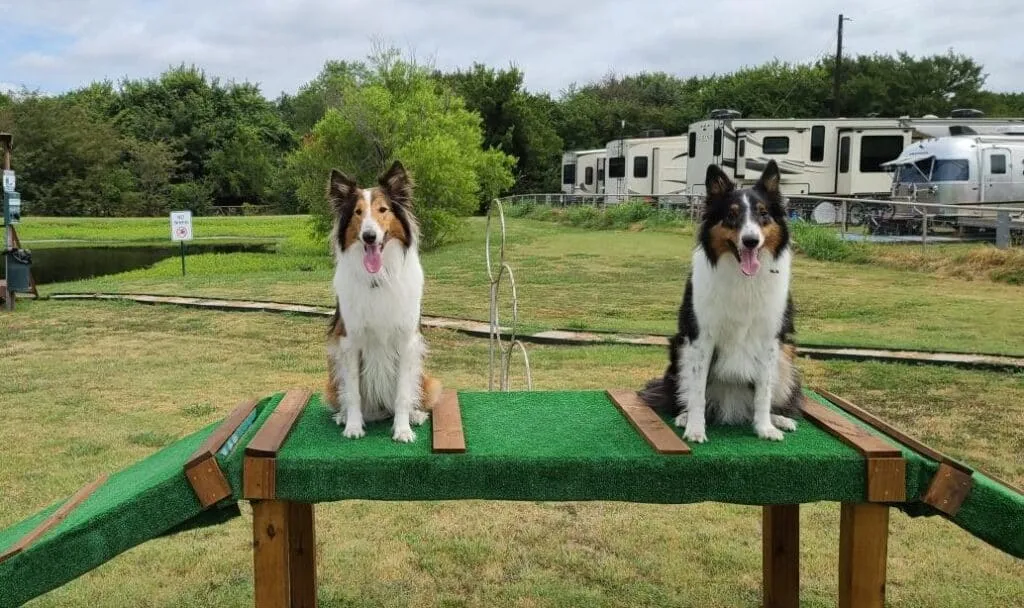
If you travel Texas by RV with dogs, your base camp matters as much as your route. One of the few North Texas options purpose-built for you is Waggin' Tail Ranch RV Resort in Pilot Point, TX, 52 miles north of Dallas in the rolling pastures of Denton County. Stay there and most sites give your dog a private fenced yard, and you and your dog get a dog agility course, swimming pond access, and farm animals (goats, chickens) that make it genuinely different from a standard RV park. This guide covers everything you need to travel Texas by RV with dogs and do it well.
Before You Leave: The Essential Pre-Trip Checklist
Veterinary records: Carry digital and physical copies of your dog's vaccine records, especially rabies and bordetella. Many parks require them. If your dog is on prescription medication, get a 90-day supply before you go; filling prescriptions on the road at an unfamiliar vet is possible but takes time.
Microchip verification: Confirm the chip is registered and your contact information is current in the national database (foundanimals.org or petlink.net). If your dog gets loose in an unfamiliar area, this is their ticket home.
Flea and tick prevention: Texas has year-round flea pressure and tick activity from February through November in most regions. Monthly oral prevention (Nexgard, Bravecto, Simparica) is the most reliable approach for traveling dogs who will be in grass regularly.
Collar ID tags: Update your tag with a working cell number, not a home landline. Consider a GPS tracker (Whistle, Fi Collar) for dogs that are escape artists.
Finding Pet-Friendly Parks (That Are Actually Pet-Friendly)
"Pets welcome" on a park listing means almost nothing. The details matter:
- Breed restrictions: Many parks prohibit "aggressive breeds" (typically pit bulls, Rottweilers, Dobermans, German Shepherds, and mixed breeds that resemble them).
- Weight limits: Parks often cap dogs at 25-40 lbs. Some have two-dog limits. Call ahead if you have large or multiple dogs.
- Leash requirements: Most parks require leashes everywhere except a shared dog park. A private fenced yard at your site eliminates this friction entirely.
- Dog park quality: Shared dog parks vary from excellent to unusable. If your dog is selective about other dogs, a private yard is far preferable to a shared space.
Managing Texas Heat with Dogs in an RV
This is the most important section in this guide. Texas summer heat kills dogs in hot vehicles, and an RV with a failed AC or a generator that cuts out is a hot vehicle. Take this seriously:
- Never leave dogs in an unmonitored rig: If you're away for more than a few minutes without someone checking, use a campground with a shaded, ventilated run. Many upscale parks offer dog daycare or supervised outdoor areas.
- Shore power backup plan: If you depend on shore power for AC and it goes out, you need a generator. RVers with dogs in Texas should have a generator capable of running at least one AC unit.
- Cooling periods: Walk dogs in the early morning and after sunset. Pavement stays hot until 9-10pm in summer. Grass is always preferable to asphalt/concrete for midday activities.
- Hydration: Dogs dehydrate faster in heat. Carry extra water and offer it frequently. Collapsible travel bowls are worth having in every bag.
- Signs of heat stress: Heavy panting, drooling, red gums, loss of coordination. Move to shade, apply cool (not cold) water to paws, groin, and neck. Call a vet immediately for severe cases.
Emergency Vet Access on the Road
Before you leave each area, locate the nearest 24-hour emergency animal hospital. In Pilot Point/Denton County, Denton (18 miles) has multiple 24-hour emergency vet clinics. In the DFW metroplex, emergency options are abundant. In rural areas, you may need to drive 30-60 minutes, so know the route before you need it.
Apps worth having: VetFinder (emergency vets near you), Pawlogical (pet health tracker). Keep your regular vet's after-hours number saved as well. Many practices have on-call services even if they can't see your dog, and they can advise you whether the situation requires an emergency visit.
Best Dog-Friendly Destinations from North Texas
Based at Waggin' Tail Ranch in Pilot Point, you're positioned for some excellent dog-friendly adventures:
- Lake Ray Roberts Greenbelt (7.6 mi): Multi-use trail connecting Isle du Bois and Johnson Branch units. Dogs on leash on trails, but the water access points let them swim freely.
- Arbor Hills Nature Preserve, Plano (32 mi): Off-leash dog park area plus miles of paved and unpaved trails. One of the best urban nature experiences in DFW.
- Flower Mound Riverwalk (28 mi): Paved trail along Grapevine Lake arm, very dog-friendly.
- Texas Tulips (0.6 mi): Half a mile up the road from the resort. Open Feb-April, dogs on leash welcome in the field during non-peak hours (call to confirm).
Packing List for Texas RV Travel with Dogs
- Vaccine records (digital + printed)
- 3-month medication supply
- Flea/tick prevention (monthly, current)
- GPS collar tracker
- Collapsible water bowls (3+)
- Cooling mat or elevated cot
- First aid kit (including Benadryl, saline, vet wrap)
- Local emergency vet address for each stop
- Crate or tether for times when AC can't be monitored